Loading
Loading
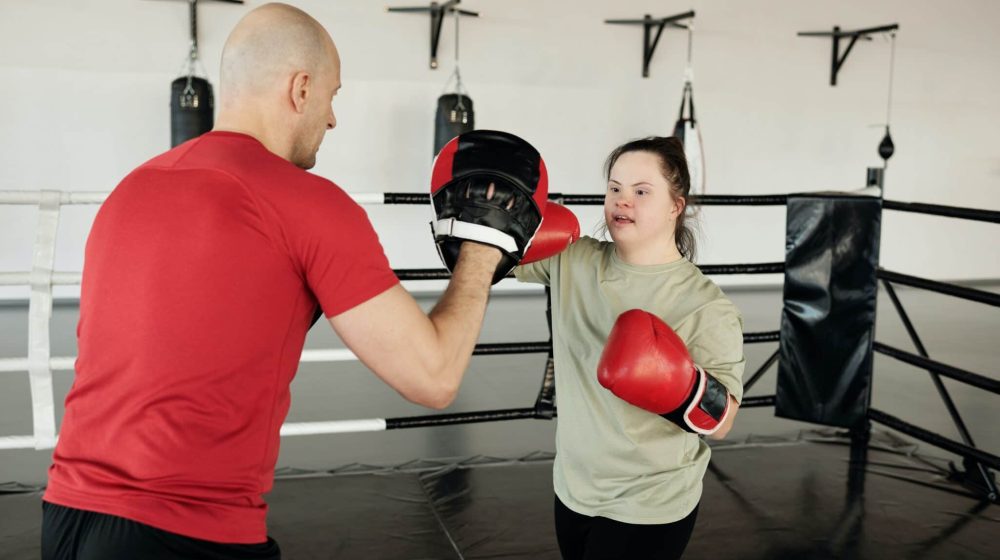
Build confidence interacting with others through guided, real-world activity and structured personal training sessions.
Support for participants who feel overwhelmed, anxious or hesitant, using movement and routine to create calm and stability.
Incorporate outdoor environments to improve engagement, mood and motivation while keeping sessions enjoyable and flexible.
Exercise structured to support emotional wellbeing, self-confidence and overall mental health in a safe and supportive way.
A good NDIS personal trainer does not just run exercise sessions. The right trainer helps build confidence, routine, physical capacity, independence, and progress in a way that respects the participant’s goals, current abilities, and day to day life.
At Gym To You, our NDIS personal trainer service is designed around individualised support. We come to the participant, bring the equipment, and deliver one to one coaching in a home, outdoor, or other suitable setting. That makes the service more accessible, less intimidating, and easier to keep consistent.
Our trainer can help with strength, mobility, balance, general fitness, motivation, routine, coordination, and confidence with physical activity. For some participants the goal is getting fitter and more active. For others it is improving everyday movement, building independence, or simply feeling more comfortable and capable in their own body.
Trainer-led NDIS fitness support matters because every participant is different. A generic exercise class or random program often misses the mark. A personal trainer can adjust the session in real time, respond to energy levels, build trust, and keep the program aligned with the participant’s real goals rather than pushing a one size fits all approach.
Gym To You already positions itself around mobile personal training, convenience, accountability, and helping clients enjoy better quality of life. That carries naturally into NDIS training. The same strengths that help busy adults stay consistent also help participants receive fitness support that feels manageable and personalised.
This service can also sit alongside surrounding support pathways. Some participants may benefit from elements of rehabilitation focused training, others may move toward broader general fitness, and some may eventually want more structured strength work as confidence and capacity improve.
For many participants, the hardest part is not understanding that exercise is good for them. The hardest part is finding a personal trainer who genuinely understands how to work with their needs, their pace, their confidence level and the reality of daily life.
At Gym To You, our NDIS personal training is built around the person first. That means taking the time to understand what matters to the participant, what barriers are getting in the way, and what kind of support will help them feel comfortable enough to engage consistently. Some clients want to improve strength. Some want to move better and feel less stiff. Some want more energy, more confidence and a more positive outlook. Others simply need someone patient, encouraging and reliable to help them take that first step.
We know that many participants may feel overwhelmed by mainstream gyms or put off by rigid programs that do not adapt to how they think and feel. That is why our service is mobile, flexible and personal. We come to the client, bring the equipment, and create a supportive training environment that feels far more manageable than trying to fit into a conventional fitness setting.
A good NDIS personal trainer does much more than supervise exercises. The right trainer helps participants build trust, routine and momentum. That is often the real difference between a program that starts and stops and a program that creates meaningful change over time.
Many participants need to feel safe, understood and encouraged before they can engage consistently. We focus on creating early wins that help confidence grow.
Structured movement can support better overall wellbeing, not only physically but mentally and emotionally as well.
Regular one to one sessions help make exercise feel more predictable and achievable, which is especially important for participants who struggle with follow through.
We do not believe training should feel intimidating or miserable. Sessions are adapted to keep participants engaged, supported and willing to keep going.
This is especially important for participants who have lost motivation, feel flat, or have had poor past experiences with exercise. A personalised approach changes the experience. Instead of feeling judged or overwhelmed, the participant can focus on building capability at their own pace with a trainer who knows how to guide them well.
Many NDIS participants live with challenges that go far beyond physical fitness. ADHD, autism spectrum disorder, anxiety, behavioural dysregulation, low motivation and difficulty focusing can all affect how someone responds to exercise. That is why a one-size-fits-all training model often fails.
We take a more empathetic and practical approach. Our trainers understand that for some clients, the real challenge is not the exercise itself. It is getting started, staying engaged, managing frustration, coping with change, or building enough confidence to keep showing up. In these cases, the trainer’s ability to communicate, adapt and connect matters just as much as the exercises being used.
Exercise can be a powerful tool for improving wellbeing, but only when it is delivered in the right way. For ADHD, that often means keeping sessions engaging, varied and active enough to hold attention without creating overwhelm. For autism, it may mean being more mindful with pacing, communication and predictability. For clients facing emotional or behavioural challenges, it often means creating a safe and non-judgmental environment where they feel supported rather than pressured.
Our role is not to force participants into a system. It is to shape the training around how they work best, so progress becomes more realistic and less stressful.
We also work with participants facing physical challenges, injury recovery and reduced mobility. In many cases, the goal is not simply fitness in a general sense. It is being able to move more comfortably, feel stronger, improve balance, reduce stiffness and build confidence with everyday tasks.
Some clients are returning to movement after surgery or injury. Some are deconditioned and need a careful starting point. Some want to improve coordination, mobility and functional strength so daily life feels easier. The personal trainer’s role is to create a program that is appropriate for the participant’s body, current capacity and long term goals.
Gentle progressions can help participants move with less stiffness and more control.
Building basic strength often improves confidence, independence and tolerance for daily activity.
Where appropriate, training can support a gradual and practical return to better function.
For many participants, the biggest win is simply feeling better in their body and more capable day to day.
For participants who need a more recovery-focused path, this service can also sit naturally alongside rehabilitation personal training, with the same supportive mobile approach that Gym To You is known for.
This service is not only for participants. It is also built to work well for families, carers, support coordinators and NDIS agencies looking for a trainer they can trust.
That trust matters. When a participant is referred for fitness support, the expectation is not just that they will be kept busy. The expectation is that they will be treated respectfully, supported properly, and guided toward realistic improvements in physical and mental wellbeing.
Gym To You’s trainers are experienced in working with participants who may be physically challenged, mentally challenged, overweight, low in confidence, or simply not used to exercise. The focus is always on meeting the participant where they are and helping them move forward without unnecessary pressure or complexity.
Every participant is different, so no two sessions should look exactly the same. Still, most successful programs include a few common elements. There is usually some form of warm up or movement preparation, followed by strength, mobility, balance or general fitness work that matches the participant’s level.
Some sessions will be more energetic. Some will be slower and more supportive. What matters is that the participant stays engaged and the training remains achievable.
We begin with what the client needs, how they respond, and what they are comfortable with.
For many participants, routine and confidence come before bigger physical goals.
We increase challenge in a way that feels manageable rather than overwhelming.
Enjoyment, encouragement and the trainer relationship all matter for long term success.
This is why one to one training can be so effective. The trainer is not just delivering exercises. They are helping the participant build a better relationship with movement, routine and themselves.
If you are an NDIS participant, family member, support coordinator or agency looking for a mobile personal trainer who works with empathy, flexibility and real care, Gym To You is here to help.
One of the biggest advantages of mobile NDIS training is that the trainer comes to the participant. That removes transport barriers, gym discomfort, and the stress of managing another appointment in a difficult environment. Instead, the support happens where the participant feels more comfortable.
That change alone can make consistency much more realistic. Sessions are easier to attend, easier to adapt, and easier to integrate into routine. The trainer also gets better insight into the participant’s day to day environment, which can help make training more practical and relevant.
Mobile training reduces travel stress and helps make sessions easier to attend and maintain.
The trainer can tailor exercises, pacing, communication, and support style to the participant.
Training in a familiar environment often helps participants feel safer, calmer, and more willing to engage.
The trainer can focus on goals that connect directly to real life movement, confidence, and routine.
That personal, mobile model is especially important when support needs vary. Some participants may need more encouragement. Some may need clearer structure and repetition. Some may need slower progressions. A one to one trainer can make those adjustments properly.
NDIS personal training can help a wide range of participants who want to build physical capacity and healthier routine with one to one support.
Some participants are starting from a low activity base and simply want to get moving safely. Others want to improve strength, control, and stamina. Some have very specific functional goals. Others want to feel healthier and more confident. A personal trainer can help shape the program around those individual outcomes.
Because Gym To You is already structured around mobile, person-centred training, it is well suited to this kind of support. The focus stays on practical results rather than generic fitness messaging.
A strong NDIS personal training program should support more than just exercise. The trainer should help improve movement, confidence, routine, engagement, and day to day quality of life in a measurable and supportive way.
Your trainer can help build physical capacity through exercises tailored to the participant’s level.
Sessions can support steadiness, control, and body awareness where relevant.
Regular trainer-led sessions often make exercise feel less overwhelming and more achievable.
Better fitness and function can support daily activity, participation, and general wellbeing.
The biggest value often comes from consistency. Once a participant has trusted support and a repeatable routine, the benefits can build across multiple areas of life. That is why trainer-led NDIS support can be so powerful compared with unstructured attempts at exercise.
A good NDIS personal trainer starts by understanding the individual, not by forcing a fixed program. The plan should be shaped around the participant’s current ability, goals, comfort level, communication needs, and relevant supports.
We look at current activity level, mobility, confidence, physical capacity, and goals.
That may mean strength, fitness, independence, consistency, or better daily function.
Exercises are selected and progressed in a way that matches the participant.
Sessions can be adjusted based on energy, engagement, and how the participant is responding.
Consistency and relationship building are key parts of long term progress.
Where appropriate, the trainer can also draw on related pathways such as rehabilitation training or broader general fitness as the participant progresses.
Gym To You is a strong fit for NDIS training because the service is already built around convenience, one to one coaching, equipment brought to the client, and flexible personalised sessions. Those strengths are highly relevant for participants who need fitness support that adapts around real life rather than forcing them into a standard gym setup.
We focus on trust, routine, progress, and practical results. That means the training is not just about completing exercises. It is about building a supportive structure that can help the participant move better, feel better, and engage more confidently with physical activity.
Because the service is mobile, it also reduces many of the common barriers that can get in the way of consistency. That is a major advantage in long term fitness support.
If you want a trainer who comes to you, builds a supportive plan, and helps create real progress in a safe and practical way, Gym To You is ready to help.
Your trainer provides one to one exercise support tailored to the participant’s goals, abilities, and comfort level.
Yes. Gym To You is a mobile service, so sessions can happen at home or another suitable location.
No. The trainer brings the equipment needed for the session.
No. It is suitable for participants at different activity levels, including beginners.
Depending on the participant, the trainer may help with strength, mobility, balance, coordination, fitness, confidence, and routine.
Yes. One of the key benefits of one to one personal training is that sessions can be adapted in real time.
That depends on the participant’s goals, support needs, and routine. Many participants start with one to three sessions per week.
Yes. Improved strength, mobility, confidence, and routine can all support greater independence in daily life.
The trainer can adapt sessions and, where appropriate, draw from rehabilitation focused training.
No. Gym To You is mobile, so the trainer comes to you with the equipment.
No. This service is based on personalised one to one support.
Yes. As the participant progresses, the trainer can adapt the sessions and overall program accordingly.